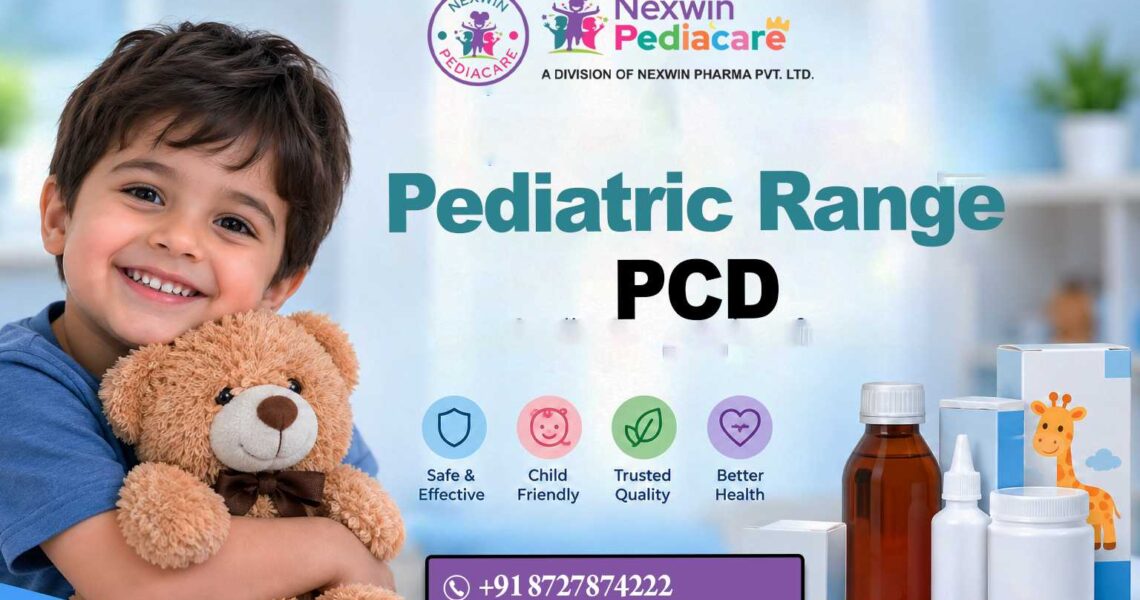
Pediatric Range PCD: A Guide for Franchise Partners
September 17, 2026Interest in Pediatric Range PCD businesses has been climbing steadily over the last few years, driven mostly by one simple fact — parents don’t compromise when it comes to their child’s health. Unlike a lot of discretionary spending categories, pediatric medicine tends to stay on the priority list regardless of what’s happening in the broader economy, which is exactly why more entrepreneurs and pharma professionals are taking this segment seriously as a long-term business rather than a side venture.
What This Business Actually Involves
A PCD (Propaganda Cum Distribution) franchise lets someone market and distribute a pharmaceutical company’s products within a defined territory, without ever setting up manufacturing themselves. When the product line is built specifically for children’s medicine — syrups, respules, dry syrups, tablets, drops, and nutritional formulations — that’s what makes this kind of business genuinely different from a general pharma franchise with a few kids’ products added on. This distinction shows up in real, practical ways: how well a syrup masks bitterness, how precisely a dose adjusts for a smaller body weight, and whether the packaging is actually designed with a parent administering medicine in mind.
Why This Segment Keeps Growing
A few factors are driving the steady rise in this business across India. Demand keeps increasing because parents are more aware of preventive healthcare than they used to be, and pediatric visits have become a routine part of raising a child rather than something reserved for emergencies. This category also tends to generate longer-term revenue than many other therapeutic areas — a pediatric course of medication often runs for weeks, and doctors don’t stop treatment until a child fully recovers, which means steadier repeat business for franchise partners compared to one-off purchases. On top of that, a genuinely high-quality pediatric range helps a company build brand differentiation, since parents and pediatricians alike tend to stick with a brand once they trust it with their child’s health.
What Actually Separates a Good Partner From a Forgettable One
Given how many companies operate in this space, it’s worth knowing what to look for before committing. WHO-GMP certification should be treated as a baseline requirement, not a bonus feature. A genuinely dedicated pediatric division matters more than it sounds on paper — companies that treat kids’ products as an afterthought to their adult catalogue usually show it in formulation quality eventually. Clear, upfront terms on territory rights, minimum order quantities, and payment structure save a lot of friction later, and ongoing support — visual aids, product samples, promotional material — genuinely helps for anyone newer to the pharma business.
Why Nexwin Pediacare Fits This Description
This division of Nexwin Pharma Private Limited was built specifically around pediatric healthcare, not treated as a side category tacked onto a bigger catalogue. Formulations come out of WHO-GMP certified manufacturing, and the product range covers respules,tablets,dry syrups/dry drops,syrups/suspensions,injectables,drops/nanoshots, and sachets/proteins — broad enough to cover most of what a pediatrician actually prescribes across a typical week. Backed by more than a decade of pharmaceutical experience and a transparent approach to franchise partnerships, Nexwin Pediacare is a solid Pediatric Range PCD option for anyone looking for a company that treats children’s healthcare as its actual core business.
Where This Franchise Is Currently Active
The franchise network currently covers several parts of the Haryana and Tricity region, including Panchkula, Chandigarh, Ambala, Karnal, Yamunanagar, and Sonipat, with a broader look at franchise opportunities across Haryana available for anyone comparing regions. Territory availability outside these areas is worth checking directly, since it changes as new partnerships get finalized.
Eligibility and What You’ll Need
You don’t need a pharma background to get started. Most companies ask for a valid drug license (wholesale or retail depending on the role), GST registration, and basic identity proof such as a PAN card. Franchise partners come from all kinds of backgrounds — medical representatives, distributors, and plenty of first-time entrepreneurs who chose this model because the entry requirements are far lower than setting up a manufacturing unit.
What the Investment Actually Looks Like
Beyond the initial security deposit, which is typically refundable or adjustable against future orders, budget for basic promotional costs, local travel to meet pediatricians and pharmacies, and enough working capital to maintain reasonable stock levels. Compared to opening a full pharmacy or manufacturing unit, the overall investment stays fairly modest, which is a big part of why this model appeals to first-time business owners as much as it does to people already working in pharma.
How to Evaluate the Product Range Before Signing Anything
A product catalogue looks impressive on paper until you actually break down what’s in it. Before committing, ask for the complete list of pediatric SKUs, not just a brochure with a handful of highlighted products. A genuinely strong range usually spans multiple dosage forms — syrups for younger children who can’t swallow tablets, dry syrups for antibiotics that lose potency once mixed, respules for respiratory conditions, and age-appropriate nutritional formulations for growth and immunity support. If a company’s pediatric range feels thin once you look past the top few products, that’s usually a sign pediatrics isn’t where their real investment is going.
The Role of After-Sales Support
Product quality gets most of the attention in these conversations, but after-sales support is often what actually determines whether a franchise partnership works out. This includes how quickly a company responds to stock queries, whether promotional material gets updated regularly, and how disputes over payment or delivery timelines get resolved when they come up. It’s worth asking directly during initial conversations: who do you contact if there’s a stock shortage, and what’s the typical turnaround time between placing an order and receiving stock. Companies with well-established systems usually have clear, confident answers rather than vague reassurances.
Common Mistakes First-Time Franchise Partners Make
A few patterns show up repeatedly among people new to this business. Some partners commit to a company based purely on the lowest security deposit, without checking whether product quality or supply reliability holds up over time — a cheaper entry point rarely matters if the products don’t move because pediatricians aren’t confident prescribing them. Others take on a territory that’s too large to service properly in the beginning, spreading themselves thin instead of building strong relationships with a smaller, more manageable set of clinics and pharmacies first. It also helps to talk to existing franchise partners of a company before signing anything, if that’s an option — a quick conversation about how supply consistency and communication have actually gone in practice tells you far more than any brochure ever will.
Red Flags Worth Watching For
A few warning signs are worth keeping in mind while comparing companies: vague or unverifiable claims about certification, pressure to make a large upfront payment before reviewing the full product catalogue, and unclear answers about what happens if products underperform in your territory. A transparent company will typically answer these questions directly, without requiring you to press for details.
Conclusion
A genuine Pediatric Range PCD business comes down to a handful of consistent markers: real WHO-GMP certification, a product line broad enough to matter, and a company that treats pediatric care as its core focus rather than a side category. Nexwin Pediacare fits that description, backed by over a decade of pharmaceutical experience and a transparent approach to franchise partnerships. If you’d like to explore what a partnership could look like, get in touch with the team today.