Pediatric Drops PCD Franchise: A Practical Guide for New Partners
October 21, 2026Parents of babies ask the same thing again and again. “Can I give it in drops?” Small babies can’t swallow tablets. They struggle with a spoonful of syrup too. Drops solve that problem. They are small, easy to measure and simple to give.
That’s why a pediatric drops PCD franchise deserves a closer look. It’s a focused product group with steady demand. This guide keeps things simple. You’ll see how the business works, what to check before you sign, and how to get started.
What Is a Pediatric Drops PCD Franchise?
Quick answer: It’s a business model where you get the right to market and distribute a company’s pediatric drops in a set territory. The company makes the products and controls quality. You handle the local work: meeting doctors, supplying chemists and managing stock.
PCD stands for Propaganda Cum Distribution. You don’t need a factory. You don’t need to build a brand from nothing. You borrow the manufacturer’s range and certification, and you bring the local relationships.
Why Drops Matter in Pediatric Care
A newborn can’t take most medicines the way an adult does. A pediatrician has to pick the right format for each age. Drops often fit infants and young toddlers well. A dropper lets a parent give a small amount of liquid straight into the mouth.
Parents like drops for three reasons:
- They’re easy to give, even to a fussy baby.
- They take up little space in a diaper bag.
- They don’t need a measuring spoon.
Doctors like them for a different reason. A small, controlled format suits a small body. The doctor decides the product and the amount. A parent should always follow the label and the doctor’s advice.
For you as a partner, this means one thing. Drops are a doctor-led category. Parents rarely choose them off the shelf. A pediatrician suggests them. So your work centers on earning that doctor’s trust.
What Nexwin Pediacare Offers in Drops
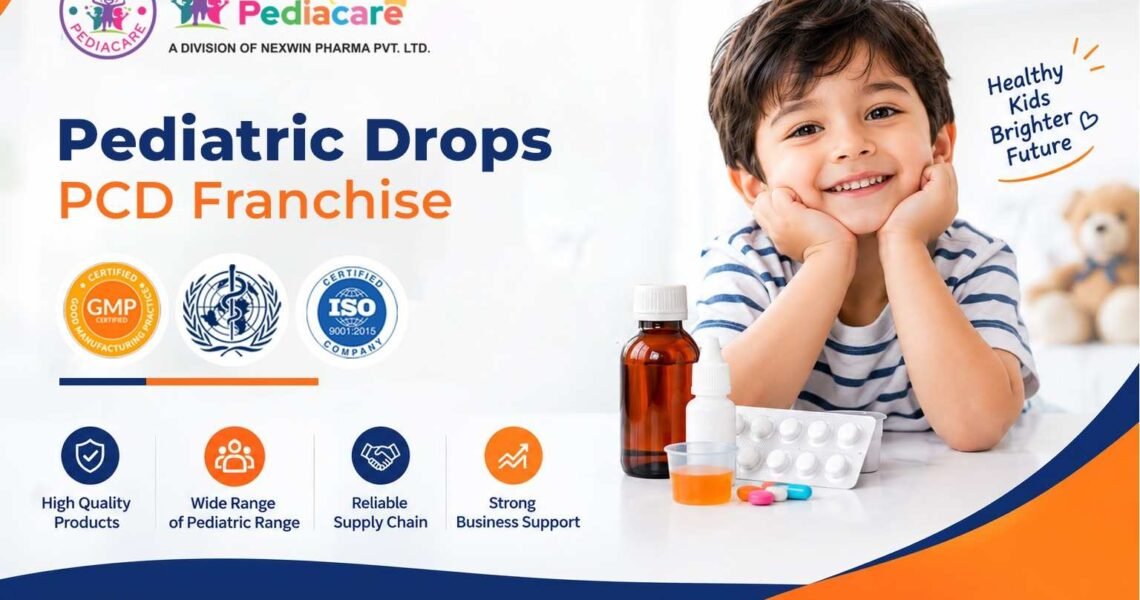
Nexwin Pediacare is a division of Nexwin Pharma Private Limited. It focuses only on children’s healthcare. Its formulations come from WHO-GMP certified manufacturing, backed by more than a decade of pharmaceutical experience.
The Drops/Nanoshots page presents the range as child-friendly medicines made for growing children. You can read about the listed product, Proxyzin Drops, on its own product page. Always read the details there before you talk to a doctor about it.
Drops are only one part of the catalogue. The same company also covers:
Why does this matter? Pediatricians prescribe across many categories. One steady supplier is easier to build a relationship with than five scattered ones.
Starting a Drops PCD Business: What You Need
You don’t need a pharma degree. People enter this field from medical sales, distribution and even unrelated jobs. The paperwork is simple:
- A valid drug license (wholesale or retail, depending on your role)
- GST registration
- A PAN card and basic ID
Next, plan your money. Expect an initial security deposit. Companies usually make it refundable or adjustable against future orders. Then add promotion costs, local travel and working capital for stock.
The total stays far below what a manufacturing unit would cost. That’s why first-time owners can manage it. Keep your first order modest. Reorder once you see what your doctors actually prescribe.
How to Win a Pediatrician’s Trust
Doctors don’t switch brands because of a nice brochure. They switch because they trust the person and the product. Here’s what tends to work.
Show up regularly. A short visit every few weeks beats one long visit every few months. Doctors remember the person who keeps coming back.
Know the product. Read the product page. Understand the format. If a doctor asks something you can’t answer, say so and find out. Honesty builds more trust than a guess.
Follow up. Ask how parents found the product. Pass that feedback to the manufacturer. A doctor who sees you act on feedback will keep listening.
Respect the doctor’s role. Never suggest amounts or promise results. The pediatrician decides. Your job is to supply and support.
Storage and Chemist Support
Drops are small bottles, and small bottles are easy to ignore. Don’t. Keep stock in a cool, dry place away from direct sunlight and heat. Follow whatever the pack label says. Check expiry dates often and move older batches first.
Help your chemists too. Tell them how the product sits best on a shelf. Make sure the labels are clear. A chemist who feels supported will recommend your range with more confidence.
Your First 90 Days: A Simple Plan
A clear plan keeps the early months calm. Here’s a realistic one.
Month one: map your area. List every pediatrician, children’s clinic and large chemist. Mark the ones close together so you can plan efficient routes. Don’t push for sales yet. Introduce yourself and the range.
Month two: start conversations. Visit your best prospects a second time. Ask what they prescribe now and what parents complain about. Keep a simple notebook. Write down names, questions and stock gaps. This habit pays off later.
Month three: place a sensible order. By now you know which doctors are interested. Order for them first. Small, steady orders beat one big order that sits on the shelf. Then ask the manufacturer for feedback on your plan.
Notice what this plan doesn’t include. It has no shortcuts and no heavy discounts. It’s just regular, honest work. Partners who follow it tend to build a base that lasts.
Six Questions to Ask Before You Sign
Every manufacturer says it’s the best. Ask these six questions and watch how they answer.
- How long has the company focused on pediatrics?
- Is the WHO-GMP certification genuine and easy to verify?
- Is my territory exclusive, and when could that change?
- How do minimum order quantities grow with my business?
- What happens if I need to return a batch over a quality concern?
- What training and marketing support do I get?
Companies that are sure of their standards answer plainly. If someone dodges, take a second look. Attractive margins mean little without a product doctors trust.
Is a Pediatric Drops PCD Franchise Right for You?
It suits you if you like steady, relationship-based work. It suits you less if you want quick results. Most partners see steady traction after six months to a year of regular visits.
It also helps if your area has active pediatricians and a good number of chemists. Look at your territory first. Count the clinics. Notice which areas have no strong pediatric brand.
If you’re still choosing a location, explore the wider network. You can start with the main page for a pediatric PCD franchise in Panchkula. Then look at Chandigarh, Ambala, Karnal, Panipat, Hisar, Rohtak, Kurukshetra, Bhiwani, Yamunanagar and Sonipat. A full overview of franchise options across Haryana is available too.
The Bottom Line
Drops are small, but the business around them is real. You win by being consistent, honest and well informed. Choose a manufacturer that treats pediatrics as its core work, not a side line. Nexwin Pediacare was built around exactly that idea.
If that sounds like the kind of partner you want to be, talk to the team and check territory availability.